Quarterly Pest Control vs. One-Time Treatment in NC
Do you need regular pest control—or can you just call when you see a bug?
The answer depends on what pest you are dealing with and whether your goal is elimination or prevention.
A one-time treatment focuses on a current, specific pest problem. Quarterly pest control takes a longer-term approach by monitoring your property and helping prevent common household pests from becoming established in the first place.
Neither option is automatically right for every home.
Common Questions Answered
When Does a One-Time Pest Treatment Make Sense?
A one-time service can be a practical choice when you have an isolated or clearly identified problem.
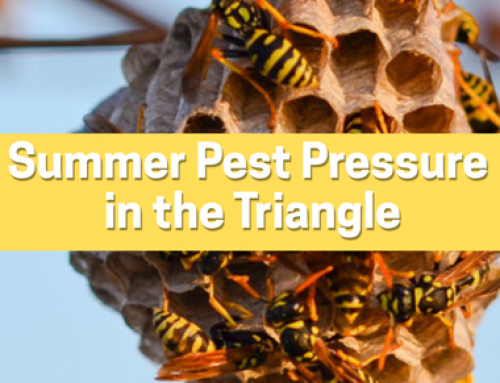
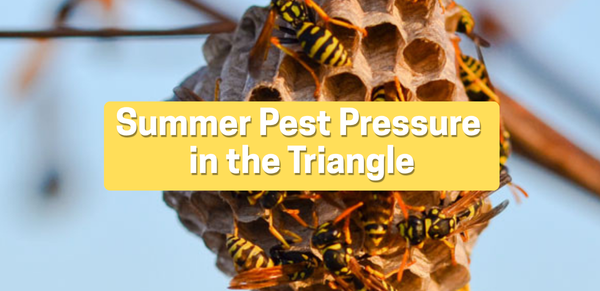
Examples might include a wasp or hornet nest, a sudden infestation involving a particular insect, or another pest issue that does not necessarily require routine year-round service.
The important part is properly identifying what is causing the problem before deciding how to treat it.
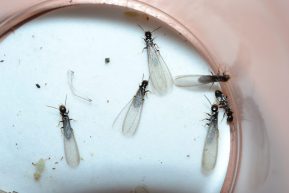
If you are not sure what kind of insect you are seeing, visit our Pest Library or send Advance Pest Control a photo for help with identification.
What Makes Quarterly Pest Control Different?
Quarterly pest control is preventative.
Rather than starting over every time ants, cockroaches, spiders or other pests appear, recurring service gives your technician an opportunity to monitor the property throughout changing seasons.
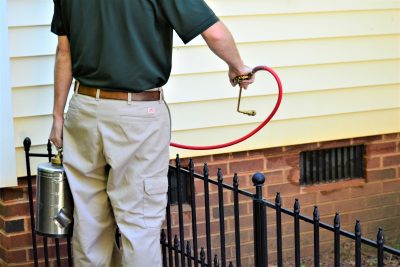
A typical visit may involve inspecting areas of concern, treating the exterior perimeter and other targeted areas, checking for changes in pest activity and discussing conditions that could encourage pests.
At Advance Pest Control, we also change our approach based on what is happening around your home instead of treating every property exactly the same way.
That is an important part of Integrated Pest Management. IPM focuses on understanding pest behavior, correcting conditions that attract pests and applying treatment where it is actually needed. NC State Extension recommends this type of pest-management approach for homes.
North Carolina Doesn’t Really Have an “Off Season”
One reason quarterly pest control works well in the Triangle is that our pest pressure changes rather than simply disappearing.
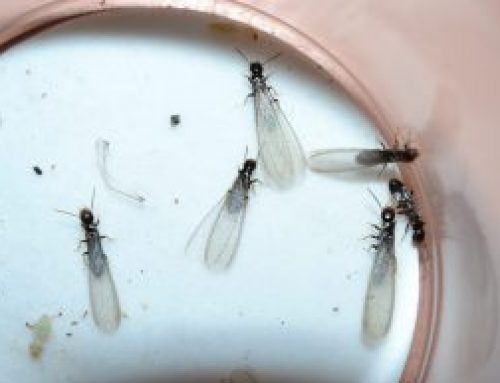
Spring may bring ants, termite swarmers and spiders. Summer increases pressure from ants, roaches and stinging insects. Fall often sends pests looking for protected areas. During winter, rodents, cockroaches, spiders and overwintering insects may continue to cause problems indoors.
Our Seasonal Pests guide explains what homeowners around Raleigh, Wake Forest, Youngsville and surrounding areas may encounter throughout the year.
Which Option Usually Costs Less?
A single treatment will usually have a lower immediate cost than committing to several services during the year.
But that’s only part of the picture.
If the same pests continue returning and you pay for repeated one-time treatments, preventative quarterly service may provide better long-term value.
Our standard quarterly residential program begins with an initial service and continues approximately every three months. No long-term contract is required, so homeowners aren’t locked into service simply because they want ongoing pest prevention.
Quarterly Pest Control May Be a Better Fit If…
Quarterly service is worth considering when you regularly see ants, spiders, cockroaches or other household pests; live near wooded areas, fields or heavy landscaping; have a crawlspace; have experienced repeated pest issues; or simply prefer a preventative approach.
One-time service can be perfectly appropriate when the problem truly is isolated.
The goal shouldn’t be to sell the most service possible. It should be to use the amount of pest control that makes sense for the property and the pest.
Not Sure Which One You Need?
That’s a good question for a pest professional to answer after learning what’s actually happening at your home.
Advance Pest Control offers residential pest management throughout Wake Forest, Youngsville, Raleigh and surrounding Triangle communities.
Visit our Residential Pest Control page or browse our frequently asked pest control questions.